Speed without durability is decay
A fast website launch can become a slow, expensive operation within six months. Here is how to spot decay, measure its cost, and build for lasting value.
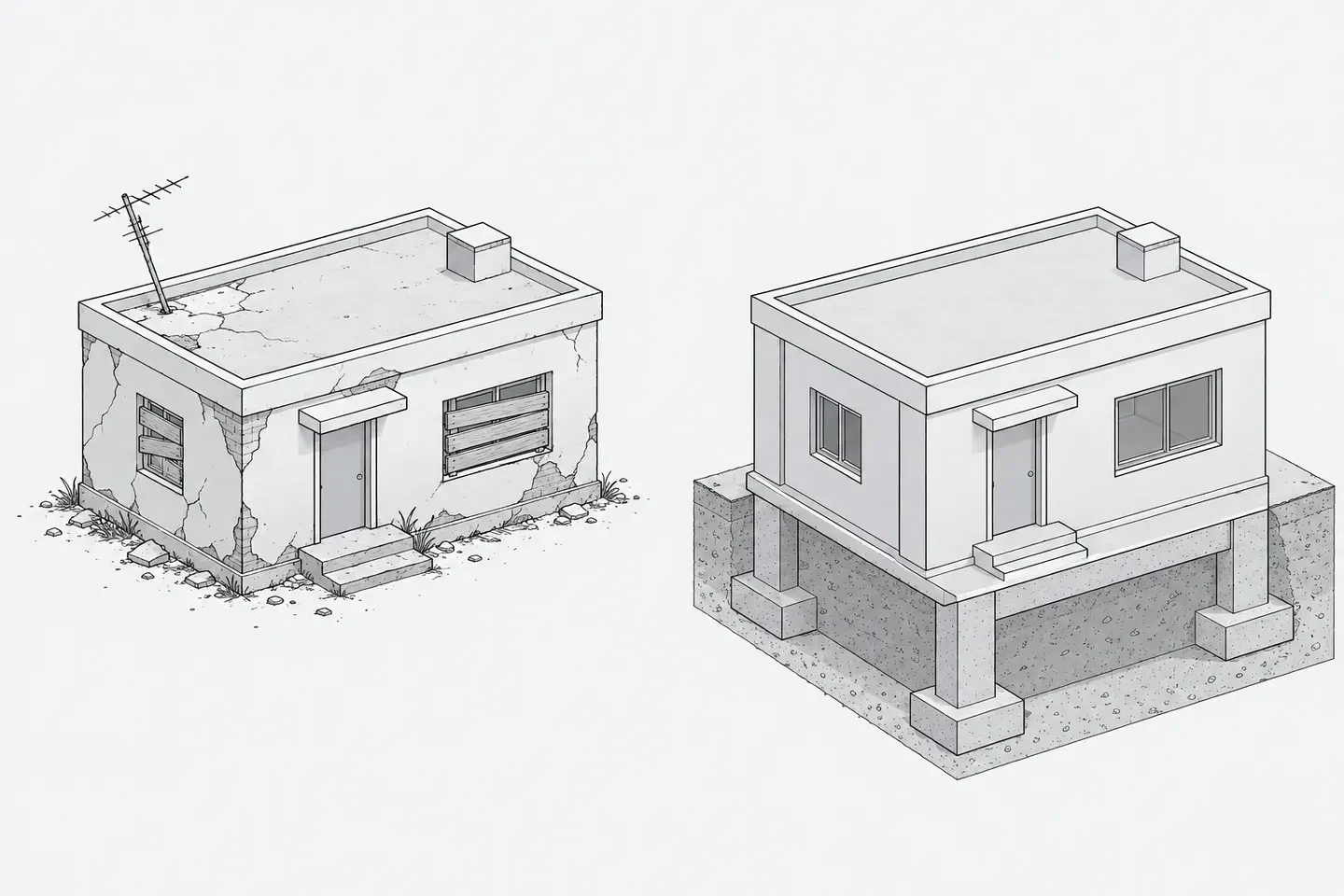
Your new website launched on schedule, and the marketing team finally has a platform for the next campaign. Six months later, a routine content update requires a developer, regional teams are publishing different versions of the same page, and nobody is certain which plugins can safely be removed.
The launch was successful by its original deadline. The operating model that followed was not.
This is a distinction we believe digital leaders should make before commissioning another rebuild. Launch speed matters because delayed websites postpone business value. But a launch that creates ongoing dependence, slow changes, and accumulating technical problems can consume much of the value it initially delivered.
Our view is straightforward: speed without durability is decay.
The launch date hides what happens afterward
A website launch gives everyone a visible milestone. Pages go live, stakeholders approve the result, and the project team closes its outstanding tasks.
The next phase is less visible. Marketing needs to publish a campaign. A distributor requests a localized product page. Sales wants to change an inquiry form. A product manager needs to update technical specifications.
These requests reveal whether the website was designed for regular business use.
Consider a multi-market B2B equipment supplier. Its website launches with approved product pages, working inquiry forms, and consistent navigation. The initial release meets the agreed scope.
Three months later, its European marketing team cannot create a new landing page without developer support. The APAC team duplicates an existing page because the content system cannot accommodate local differences. A plugin update breaks an inquiry form, but nobody knows who owns the integration.
None of these events necessarily means the original developers were incompetent. The project may have been scoped around delivering the initial website rather than establishing the capabilities required to operate it.
That distinction matters when evaluating success.
A launch can meet its deadline while leaving essential operating requirements unresolved. If those requirements were excluded from the original scope, the resulting problems are partly a planning failure, not simply a technical failure.
The website continues running, but the business becomes progressively less willing to change it.
The six-month cost appears in ordinary requests
Website decay rarely arrives as a single large invoice. Its costs accumulate through delayed campaigns, repeated developer involvement, manual workarounds, and corrections to previous changes.
Consider the following illustrative example. These are hypothetical numbers, not results from a Vibery client.
A marketing team handles 12 routine website changes each month. Each change requires two hours of developer involvement and three business days of elapsed time, including waiting, clarification, implementation, and approval.
Over six months, that creates 72 requests and 144 hours of developer involvement. At an illustrative internal cost of $75 per developer hour, the direct technical labor amounts to $10,800.
Now consider a durable implementation where the marketing team can complete eight of those 12 monthly requests independently. The remaining four still require two developer hours each.
That leaves 48 developer hours over six months, equivalent to $3,600 at the same illustrative rate.
The difference is 96 developer hours, or $7,200 in illustrative direct developer labor. It does not establish total financial savings, because training, platform investment, marketing labor, and transition costs also matter.
More importantly, it excludes the potential value of publishing campaigns sooner.
A landing page waiting three business days may miss a planned campaign date. An outdated specification may remain visible during an active sales conversation. A delayed distributor update can create inconsistent information between markets.
Those outcomes require separate evidence before assigning them a financial value.

The central question is therefore broader than maintenance expenditure. It concerns how quickly the business can respond after the original delivery team has moved on.
The real test of a website is how efficiently the business can change it after launch.
Five signals show when a website is decaying
Website decay has observable symptoms. Digital leaders can review them without commissioning a complete technical audit.
The following checklist focuses on operational friction, structural inconsistency, and declining technical confidence.

1. Routine changes remain in a developer queue. Measure the time between requesting and publishing a change. Separate simple content updates from changes that legitimately require engineering. A growing queue of simple requests suggests the publishing workflow is too dependent on technical staff.
2. Markets duplicate pages to work around the system. Local differences are often necessary. Uncontrolled duplication is different. When each regional team maintains separate copies of shared product information, updates become harder to coordinate and inconsistencies become more likely.
3. Plugins and integrations have no accountable owner. Every component introduces a maintenance responsibility. Teams should know why a plugin exists, what depends on it, who approves updates, and how failures are handled. An unknown plugin is a governance risk even when it currently works.
4. Page performance deteriorates. Track important page types consistently, using comparable measurement conditions. In our Nam Sơn Laser project, average page load reached approximately 3 seconds, down from over 6 seconds. The project was delivered before the V² Framework existed, and that improvement alone does not establish long-term durability.
5. Documentation cannot support a handover. If credentials, deployment procedures, content rules, and integration details exist only in conversations with former developers, routine work becomes dependent on individual memory.
These signals should be investigated together. A slow page does not automatically mean poor architecture, and developer involvement is appropriate for complex changes. The concern is recurring friction without clear ownership or improvement.
Durability has to be delivered, not assumed
A durable website needs more than maintainable code. It needs a business team capable of operating the system within clearly defined responsibilities.
In our delivery approach, that capability is established through four practical commitments.
First, documentation describes the actual operating environment. It should cover site structure, publishing workflows, integrations, deployment procedures, and recovery responsibilities. A document that cannot help a new team member perform a real task has limited operational value.
Second, the client receives the agreed source files and appropriate administrative access. Ownership must be practical, with documented rights, access arrangements, and responsibilities. Possessing files without the ability to maintain or deploy them does not provide meaningful independence.
Third, training is based on tasks rather than software demonstrations. A marketing editor should be able to publish an approved page. A regional lead should know which information can be localized. A technical administrator should understand how to review a change safely.
Our handover checklist covers the materials and operational responsibilities that should be settled before delivery closes.
Fourth, change efficiency needs measurement.
We recommend recording a baseline for routine request volume, median time to publish, the proportion completed without developer support, and the number of changes requiring correction.
The measurement boundary matters. A content edit and a new CRM integration should not be treated as equivalent requests. Categorize them before comparing performance.
Durability also requires ongoing maintenance. Dependencies change, security requirements evolve, and business needs become more complex. No initial architecture removes the need for future technical work.
The objective is to keep that work deliberate, understandable, and manageable.
Longevity measures whether the value survives launch
Vibery uses the V² Framework to evaluate digital investments through two connected dimensions:
Value = Velocity × Longevity
Velocity concerns how quickly agreed value is delivered. Longevity concerns whether that value remains useful and whether the client can sustain it.
The framework runs through Value Map, Value Sprint, Value Transfer, and Value Growth.
During Value Map, we establish the baseline, intended outcomes, First Value Date, and durability measures. During Value Sprint, we deliver the agreed scope. Value Transfer addresses ownership, documentation, access, and team capability. Value Growth evaluates what continues working and what needs improvement.
For Longevity, we examine evidence such as the proportion of routine changes handled in-house, time required to publish them, performance stability, and completion of agreed handover responsibilities.
We review those measures at 30, 90, and 180 days against the baseline and agreed targets.
The V² Score multiplies a Velocity Score from 0–10 by a Longevity Score from 0–10. The underlying measurements must accompany the score. It is a reporting tool, not a scientific measure of quality or proof that every outcome was caused by our work.
A fast launch with weak team independence should therefore not receive the same assessment as a fast launch that remains manageable six months later.
Our services connect website delivery, security, automation, and training where those capabilities are needed to support lasting results.
Audit the last six months before planning the next rebuild
Before approving another website project, review the previous six months of ordinary operating activity. Collect change requests, publication dates, developer involvement, performance records, and existing handover materials.
Identify which tasks were unnecessarily difficult, which problems repeated, and which responsibilities remain unclear. Establish a baseline your team can use to judge the next investment.
The goal is not to eliminate developers or avoid future spending. It is to ensure that each delivery leaves the business more capable of maintaining and improving what it owns.
For a structured discussion of your current baseline and the outcomes worth improving, book a Value Map call.