B2B SEO for plastic machinery suppliers: from niche keywords to qualified conversions
How Trung Nguyên TNT grew organic traffic by 287.5% and recorded 548 qualified conversions, with a second industrial SEO and Google Ads case.
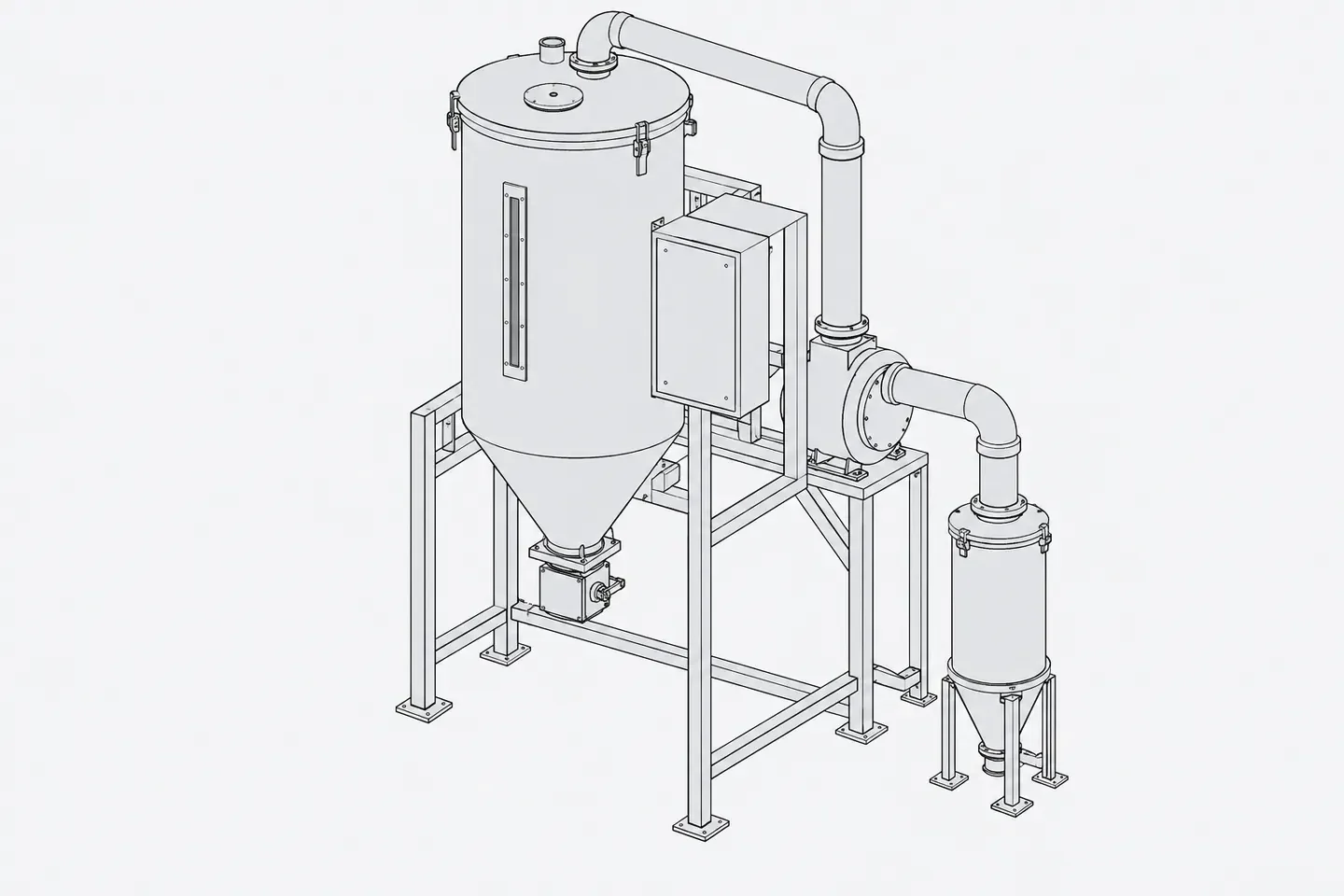
A plastics manufacturer looking for auxiliary machinery may search for a specific equipment category rather than a supplier's name. For a marketing director, the challenge is to make the right product visible at that moment and turn the visit into a useful sales inquiry.
This is where specialized industrial suppliers have an opportunity. A narrow market can contain highly specific searches, while the existing results may offer few pages that adequately explain the equipment and guide a buyer toward contacting a supplier.
Our work with Trung Nguyên TNT and Hoàng Tiến Phát provides two examples. Both operate in the plastics machinery sector. Both recorded substantial improvements in organic visibility and conversions, although their marketing approaches differed.
These engagements were delivered before Vibery introduced the V² Framework. The published figures describe project outcomes, not V² Scores or proof of long-term revenue impact.
Industrial search rewards relevance to a specific buying task
Industrial equipment SEO differs from a broad consumer search campaign. A potential buyer may already understand the production process and need to find equipment for a particular application.
That creates a useful starting point for keyword research. Instead of organizing the entire strategy around broad category terms, a supplier can examine how customers describe machinery, technical requirements, applications, and purchasing needs.
Our view is that narrowly defined industrial categories can be attractive SEO opportunities when relevant buyer demand exists and competing pages do not answer those searches adequately. Low search volume alone does not make a keyword unimportant.
A page attracting a small number of relevant equipment buyers may be more commercially useful than a general article receiving substantially more visits. However, that judgment requires conversion evidence, not assumptions about search intent.
The practical task is to connect three things: what the buyer is searching for, what the supplier can provide, and what the buyer should do next.
A useful application page might explain where a particular machine fits into production, which requirements matter when selecting it, and how to request further information. These are recommendations for page design, not claims about individual pages in the projects below.
This approach gives SEO a commercial purpose. Rankings make the supplier discoverable. Relevant pages help buyers evaluate the offer. Clear contact paths make it possible to measure the resulting interest.
Trung Nguyên TNT: search visibility translated into qualified actions
In 2025, we delivered inbound marketing and full-stack B2B SEO for Trung Nguyên TNT, a supplier of auxiliary machinery for the plastics industry.
The work covered niche keyword targeting, authority building, conversion pages, and visibility in AI recommendations. Rather than judging performance solely through rankings, the project also tracked organic traffic and contact actions.
The Trung Nguyên TNT case reports the following results:

The ranking performance is significant relative to the original commitment. Achieving 41 Top 5 keywords against 3 committed indicates that the project established search visibility across more terms than the committed target.
The organic sessions also exceeded the stated KPI, alongside strong year-over-year growth.
The conversion figure is particularly relevant to an industrial marketing director. The project recorded 548 qualified conversions, defined in the published case as chat clicks and hotline calls.
These are meaningful contact actions, but they are not equivalent to 548 accepted sales opportunities or completed equipment purchases. The published evidence does not establish the subsequent sales outcomes.
That distinction matters because machinery purchasing often requires technical assessment, commercial discussion, and internal approval after the first contact.
The reported conversion rate of 4.63%, up 20.5% year over year, provides another measure of performance. It should be read as the case's reported metric rather than recalculated from the headline sessions and conversion totals without confirming their underlying measurement scopes.
For an industrial supplier, search visibility becomes commercially useful when relevant buyers can take a measurable next step.
AI recommendations added another source of visibility
Trung Nguyên TNT also recorded an 86.6% ChatGPT citation share for plastic-machinery supplier queries and 231 sessions from AI platforms.
These figures extend the visibility picture beyond conventional Google rankings.
AI-search visibility describes whether an AI assistant mentions or cites a supplier when responding to relevant questions. It is particularly worth examining when buyers use assistants to research machinery categories, compare approaches, or build an initial supplier shortlist.
The TNT result demonstrates reported visibility within the monitored query category. It does not mean that ChatGPT recommended TNT in 86.6% of every possible plastics machinery conversation.
Likewise, 231 AI-platform sessions show a recorded source of visits. The published case does not establish how many of those visits became qualified inquiries or sales.
For an industrial marketing team, these results suggest an additional measurement requirement: evaluate how the brand appears in AI-generated answers while continuing to measure what visitors do after reaching the website.
We examine that distinction further in what AI assistants say about industrial equipment brands.
Hoàng Tiến Phát: combining organic search with Google Ads
A second reference comes from Hoàng Tiến Phát, a machinery and equipment supplier for the plastics industry.
During 2024–2025, we delivered an integrated SEO and Google Ads engagement aimed at increasing brand awareness and bringing in buyers.
The Hoàng Tiến Phát case reported:

The organic results show that specialized industrial visibility can improve through a coordinated search program. The 391 organic conversions also give the traffic growth a measurable commercial dimension.
Paid advertising provided a second acquisition channel, with its own performance figures.
The difference between Display's 9.56% conversion rate and Search's 3.39% should not automatically be interpreted as Display being the better channel.
These rates cannot establish relative business value without knowing the conversion definitions, campaign targeting, attribution, spending, and subsequent lead quality.
Similarly, the case does not isolate the incremental contribution of SEO versus Google Ads to overall business performance.
What the evidence supports is more specific: an integrated organic and paid program coincided with substantial improvements in organic search performance and recorded measurable paid-channel conversion activity.
What the two engagements teach us about measurement
The common industry context makes these projects useful references, but they should not be treated as a controlled comparison.
Trung Nguyên TNT used a full-stack inbound SEO approach including conversion pages and AI recommendations. Hoàng Tiến Phát combined SEO with Google Ads. Both recorded increased organic visibility and conversion activity.
Two principles can be carried into future industrial campaigns.
First, keyword selection should reflect the supplier's actual equipment categories and buyer applications. Second, visibility needs a corresponding path to inquiry. TNT explicitly included conversion pages; for Hoàng Tiến Phát, the published record confirms organic conversions without detailing the individual page implementations.

Under today's V² Framework, we would define additional measures through the Value Map before delivery begins.
For example, a future industrial SEO engagement could track the time until the first agreed outcome, qualified inquiries by equipment category, acceptance of those inquiries by sales, and whether conversion performance persists after launch.
The V² Framework uses Value = Velocity × Longevity. Velocity concerns how quickly agreed value is delivered. Longevity examines whether that value remains useful and manageable over time.
For SEO, this would require more than a ranking snapshot. We would examine how consistently pages continue attracting relevant visitors, how inquiries progress through sales, and whether the client's team can maintain the content and measurement system.
Neither historical case has the complete evidence required for a retrospective V² Score. We therefore report the original results without manufacturing one.
A practical starting checklist for industrial suppliers
If your company supplies machinery or specialist equipment, start with a bounded audit rather than a broad commitment to publish more content.
- Define the equipment categories that matter commercially. Identify the product lines and applications your business wants to sell, then confirm how prospective buyers describe them.
- Inspect the current search results. Look for queries where existing pages fail to explain relevant equipment, technical considerations, or the next purchasing step.
- Map each priority query to a useful page. Establish whether an existing product or application page should be improved before creating another page.
- Make contact actions measurable. Track relevant forms, chat clicks, and hotline actions, while distinguishing those events from sales-qualified opportunities.
- Separate organic and paid reporting. Record traffic, conversion definitions, and inquiry quality by channel before drawing conclusions about relative performance.
- Include AI-search visibility in the baseline. Monitor a defined set of relevant questions, record citations and referral sessions, and acknowledge that assistant responses can vary.
- Agree how results will be reviewed. Record starting values, targets, data sources, responsibilities, and the checkpoints at which the team will assess progress.
These steps will not guarantee the outcomes recorded by either client. Competition, website condition, product information, and the supplier's sales process all affect what is achievable.
They do establish a clearer basis for deciding where SEO investment belongs.
Start with one equipment category, a defined set of buyer queries, and a measurable inquiry path. Review the results before expanding into additional categories or channels.
If you want to establish that baseline with us, book a Value Map call to define the scope, first outcome, and measures for your industrial website.