What rebuilding a laser equipment website taught us before V²
Nam Sơn Laser's 2025 rebuild improved search reach, conversions, and page speed. The larger lesson is how we would measure first value and ownership from the start.
You manage an industrial distributor's website, but cannot tell whether buyers find it or take the next step toward an inquiry. A redesign may look better without clarifying what changes for the business.
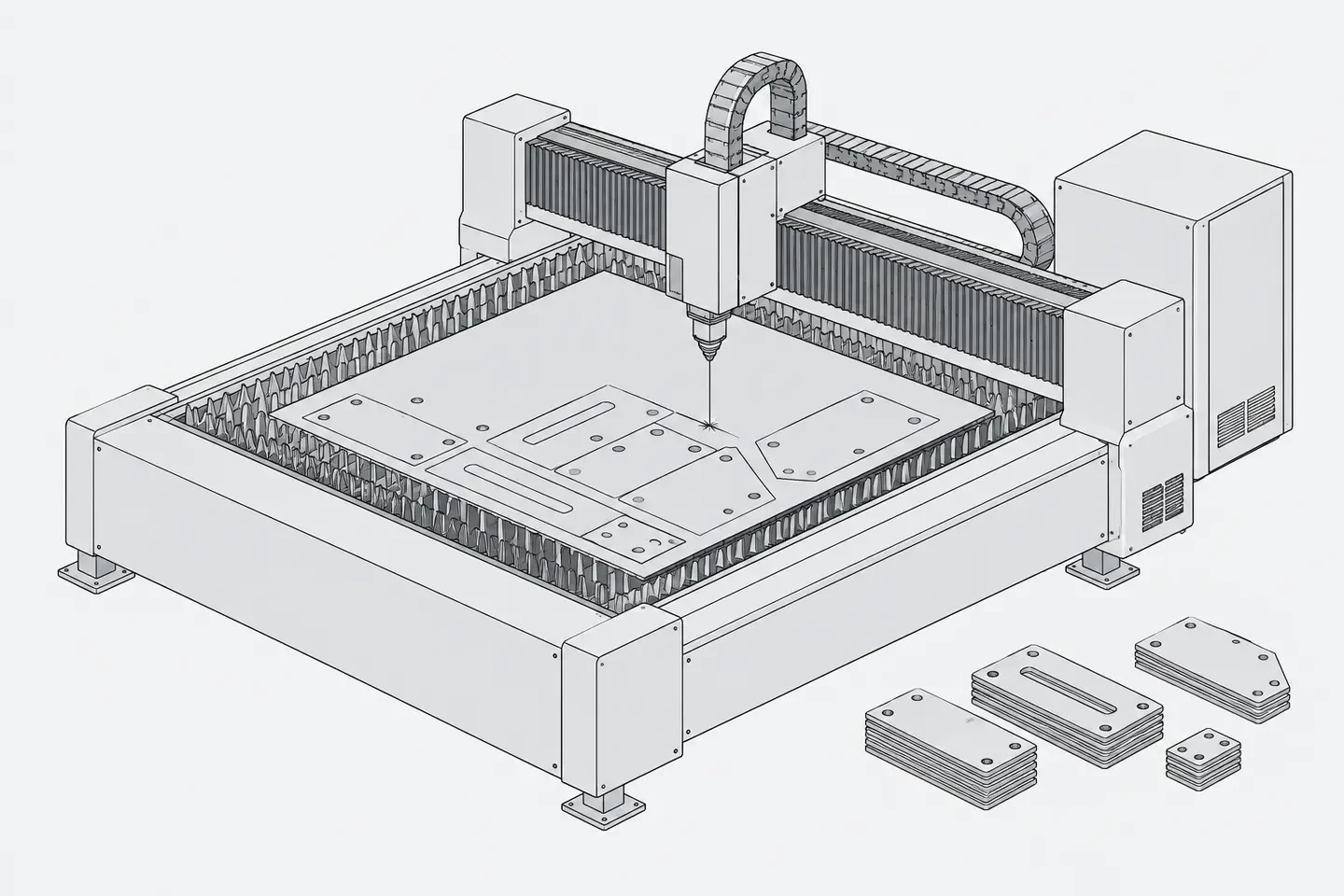
That was the context for our 2025 work with Nam Sơn Laser, a distributor of laser cutting, welding, and engraving machines. We rebuilt its low-value website into a B2B lead platform. The published results matter, as do the lessons about measurement and handover.
This work was delivered before the V² Framework existed. We do not assign it a retrospective V² Score. Instead, we use it to explain what we would preserve and what we would change in a similar engagement today.
The starting problem was business value, not appearance
For an industrial distributor, a website has several jobs. Buyers must discover relevant equipment, understand the options, and find a route to contact the supplier. Appearance alone cannot establish that those jobs are happening.
Nam Sơn Laser's starting point was a website delivering limited business value. The scope of our rebuild therefore went beyond a visual refresh. We treated search visibility, buyer journeys, technical performance, and opportunities to inquire as connected parts of the same problem.
A Marketing Director needs evidence to justify investment; a Digital Lead needs it to prioritize fixes. That evidence should show whether people find the site and take measurable actions toward an inquiry.
Our view: define those jobs before specifying designs, and separate website actions from sales-confirmed outcomes.
Search structure and buyer journeys had to work together
We worked on keyword architecture: organizing search topics so the site could connect relevant searches with relevant content. That helps buyers arrive at relevant information through search.
We also developed journey-based content. That means considering what someone needs at different points in the evaluation process, rather than treating every visitor as ready to submit a form. A visitor may need to understand an equipment category before making contact.
Alongside this content work, we addressed technical and user-experience issues. Technical fixes help search systems access and interpret a site; UX fixes make it easier for people to navigate and act. A useful content path loses value if pages are slow or inquiry routes are difficult.
AI visibility was also part of the scope: making the site more discoverable and understandable in environments where AI tools help people find information. We should be precise here. The published case includes this work, but it does not provide a separate AI referral or citation result. We cannot claim a measured increase in AI-generated inquiries from this project.
These elements should be planned together, although reporting cannot automatically isolate their individual effects.
The results were visible, but their limits matter
The published Nam Sơn Laser case records outcomes across rankings, organic traffic, conversions, and speed.

We achieved 79 new keywords in the Top 10 against a target of 30, while 32 keywords were held in the Top 10 against a commitment of 20. Organic traffic reached 15,112 sessions against a target of 13,600.
The site also recorded 315 conversions, covering chat, hotline, inbox, and consultation-form actions. Average page-load time improved to approximately 3 seconds, from over 6 seconds.
Each measure answers a different question. Rankings and sessions describe search reach. The conversion count shows that visitors took measurable contact-related actions. Load time gives a concrete indication of a faster browsing experience.
They do not prove how many inquiries became qualified opportunities or sales, isolate each intervention's effect, or establish durability at post-launch checkpoints.
A website result is more useful when the team can explain what was measured, what changed, and what remains unknown.
We can report strong project results without claiming complete evidence of commercial impact.

Today we would agree the baseline and First Value Date before delivery
Our current V² Framework starts with a different reporting discipline. Value = Velocity × Longevity: we consider how soon useful value arrives and how well it can continue after the initial work. Its stages are Value Map, Value Sprint, Value Transfer, Value Growth.
In the Value Map, we would agree a written baseline before changing the site. That means recording the starting definitions and values for the measures that matter: search visibility, organic sessions, conversion actions, and page performance. We would specify tools, comparison periods, and owners.
The Nam Sơn Laser case provides published targets and results, plus a before-and-after indication for load time. It does not supply a complete, agreed V² baseline. We would not recreate one after the fact.
We would also commit to a First Value Date: an agreed date for a specific, verifiable first outcome, rather than treating the final website launch as the only milestone. For a future industrial site, the first proof might be a defined set of pages published with working inquiry routes and tracking verified. That is an illustrative deliverable, not a claim about what happened at Nam Sơn Laser.
During the Value Sprint, each release would have acceptance criteria. New requests would require written approval, protecting the agreed scope and date.
For Value Growth, we would plan reviews at 30, 90, and 180 days. Each checkpoint would compare the same agreed measures, document changes, and explain what the data cannot attribute to the website alone. The V² Report would show the underlying results, including shortfalls, rather than reducing the story to a headline score.
This would let marketing and digital teams evaluate progress during delivery and decide what to improve next.
Handover should begin before the last page goes live
The other change we would make is to plan for the client's independence at the start. A rebuilt website keeps creating value only if the people responsible for it can maintain information, review performance, and make routine changes.
Under Value Transfer, we would define what the client receives and what the team should be able to do after handover. That includes documentation, source and access ownership, and training matched to the roles actually maintaining the site. We would identify them during the Value Map.
For example, a marketing team might need a documented process to update content and interpret inquiry reports. A digital team might need access records, technical documentation, and a clear boundary between changes it can make independently and those requiring specialist support. These are future recommendations, not claims about the 2025 handover.
Training would need evidence too. Attendance at a handover session does not show that a team can maintain the website. A stronger check is whether named owners can complete agreed routine tasks without needing us to step in.
Reaching a traffic target does not establish long-term independence. We cannot infer it from Nam Sơn Laser's published metrics, so we would review it separately.
Before your next rebuild, write down what success requires
Nam Sơn Laser's results support an integrated approach to search, content, experience, and inquiries. Delivery metrics remain only part of the evaluation.
Before commissioning a rebuild, agree three things with your marketing, digital, and sales stakeholders:
- The baseline and definitions: which search, traffic, inquiry, and performance measures count, how they are recorded, and what the starting values are.
- The first proof and its date: what must be working by the First Value Date, how you will verify it, and how changes to scope will be approved.
- The ownership and review plan: who maintains the site, what documentation and training they need, and what you will inspect at 30, 90, and 180 days.
You can make those decisions before selecting a new design or technology. They give your team a way to assess the rebuild when it begins producing evidence and long after launch.
If you want to structure those decisions with us, book a Value Map call.